
Pest guide
Wasp, yellowjacket and hornet identification
The nest usually tells you more than the insect. Here’s how to identify stinging insects by where and how they build.

Not every buzzing insect is a wasp
Carpenter bees look like bumblebees with shiny, bare abdomens. They bore perfectly round holes in fascia, decks and soffits in spring. Honey bees are beneficial; swarms should go to a local beekeeper or bee-removal specialist.
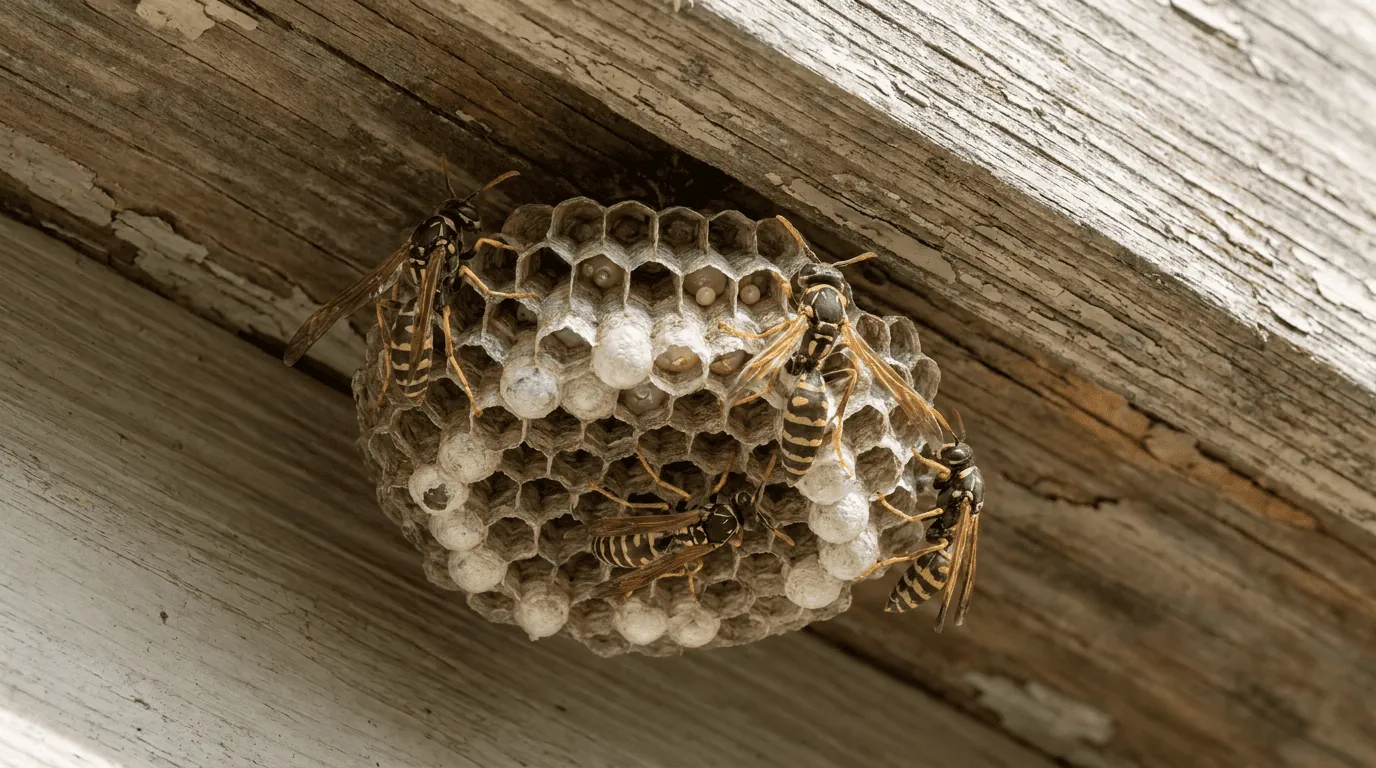
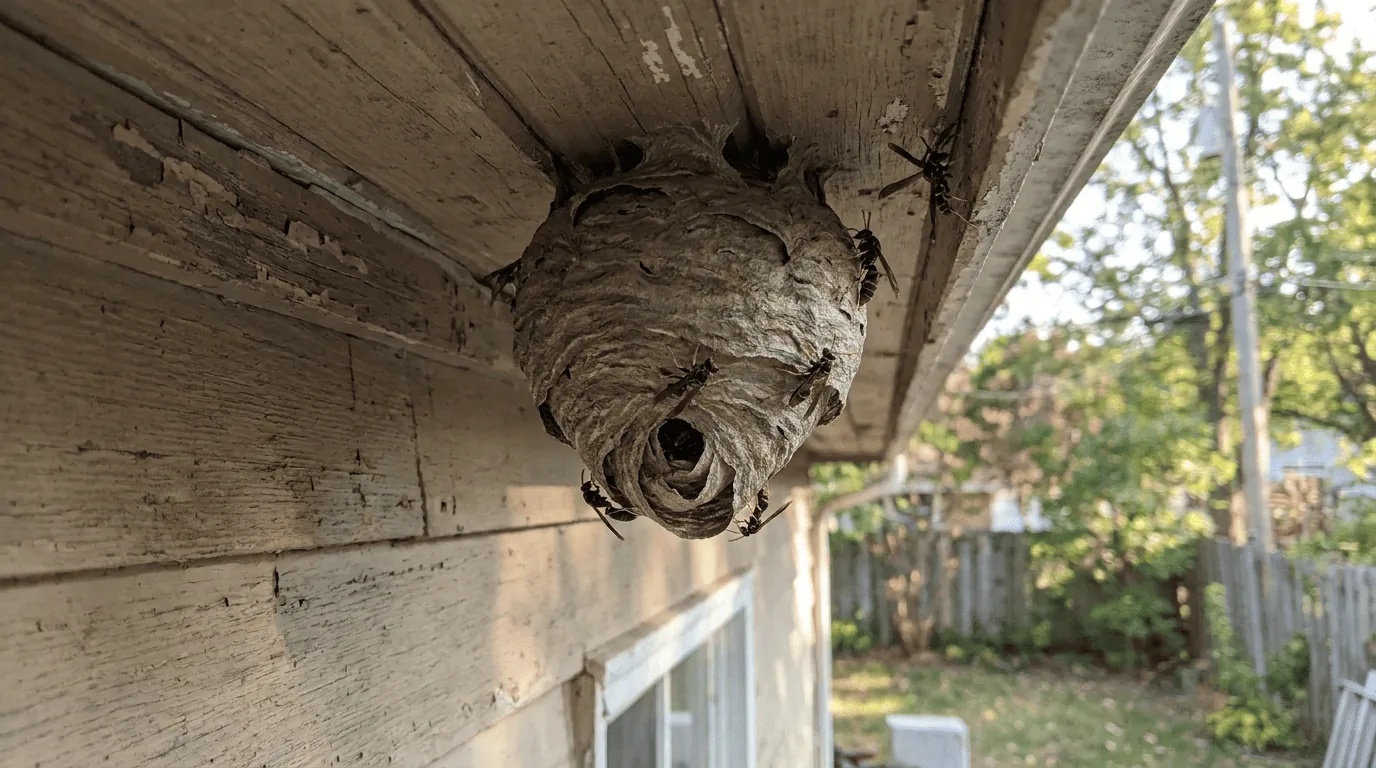
Nest guide
| Nest | Likely insect | Caution level |
|---|---|---|
| Open, umbrella-like comb under eaves | Paper wasps | Moderate |
| Hole in the ground with steady traffic | Yellowjackets | High, especially late summer |
| Gray paper ball in a tree or shrub | Bald-faced hornet | High |
| Activity in a wall void or hollow tree | Yellowjackets or European hornets | High; don’t seal the opening |
| Round holes in wood with sawdust | Carpenter bees | Low (males can’t sting) |