
Interactive tool
Pest identification: what are you seeing?
Select the signs you’ve noticed. The navigator suggests likely pests and the guide to read next. Below it, browse the full Atlanta pest library.
Select one or more signs to see likely pests and where to learn more.
Atlanta pest library
-

Subterranean termites
Reticulitermes spp. (eastern subterranean); Coptotermes formosanus (Formosan, rare)
- Size
- Workers ~1/8 in; swarmers ~3/8 in including wings
- Look for
- Creamy-white soft-bodied workers; dark swarmers with two pairs of equal-length wings and a straight, thick waist.
- Found
- Soil contact points, crawl spaces, mud tubes on foundation walls, door frames, baseboards.
- When
- Native swarms typically late winter–spring on warm days after rain; Formosan swarms late May–early June at dusk (UGA C868).
-

Carpenter ants
Camponotus spp.
- Size
- Workers ~1/4–1/2 in (variable sizes in one colony)
- Look for
- Large black or black-and-red ants; one node at the waist; evenly rounded thorax profile.
- Found
- Moist or decaying wood — window sills, roof eaves, around leaks; piles of coarse "frass" (wood shavings and insect parts).
- When
- Most visible spring–summer; nocturnal foragers.
-
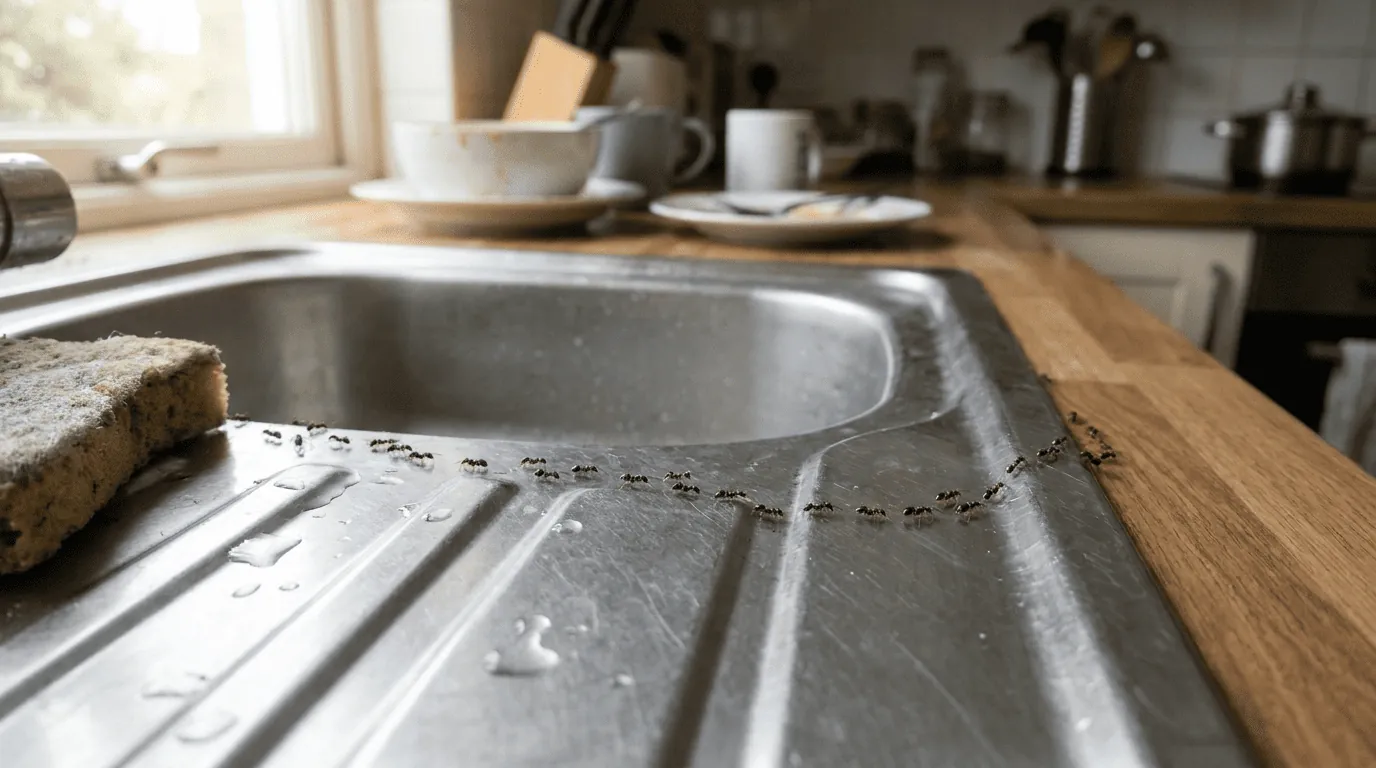
Argentine ants
Linepithema humile
- Size
- Workers ~3/16 in (UGA C926)
- Look for
- Light-to-dark brown, uniform size, single node, move in fast steady trails.
- Found
- Kitchens, bathrooms, along baseboards and plumbing; outdoor nests in moist mulch.
- When
- Indoor invasions often spike during hot, dry spells (UGA).
-
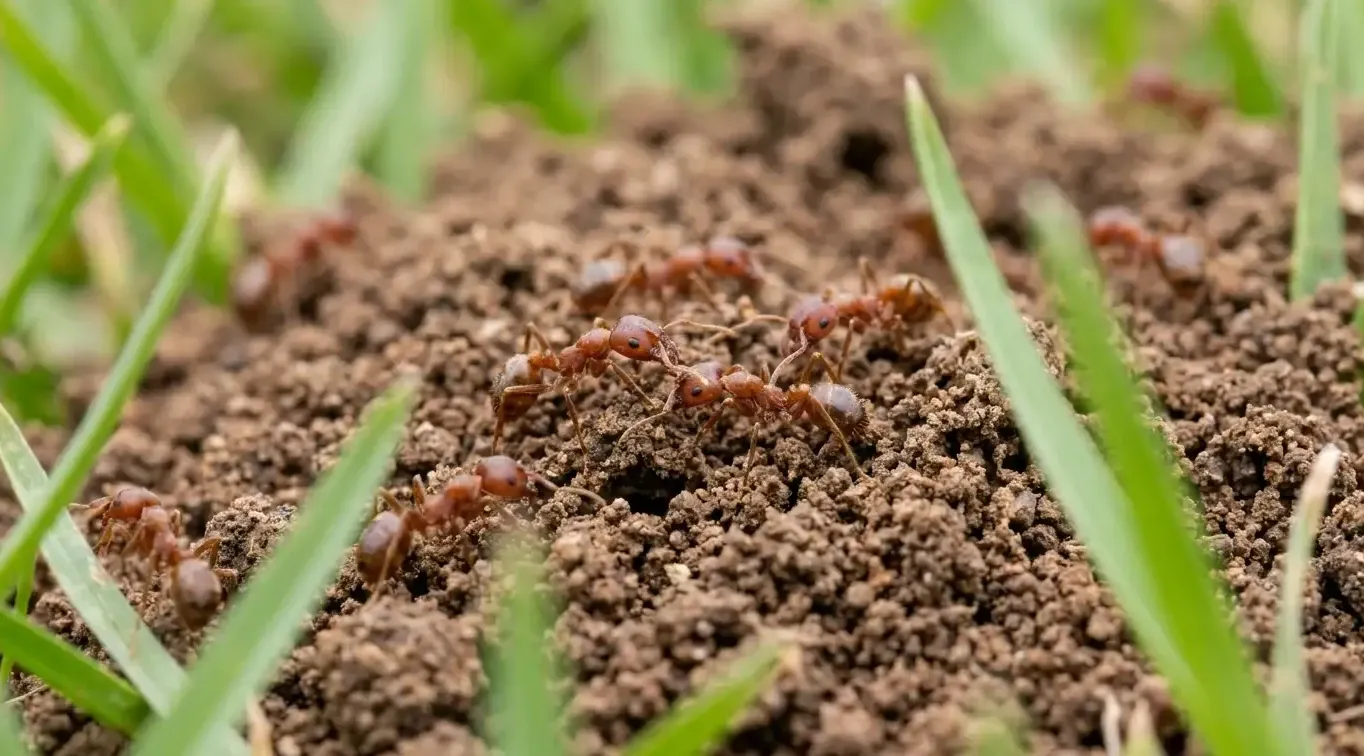
Red imported fire ants
Solenopsis invicta
- Size
- Workers ~1/8–1/4 in (variable)
- Look for
- Reddish-brown ants; fluffy soil mounds with no central opening, often after rain.
- Found
- Sunny lawns, playgrounds, road edges, utility boxes.
- When
- Mounds most noticeable spring and fall.
-

German cockroaches
Blattella germanica
- Size
- ~1/2–5/8 in
- Look for
- Light brown with two dark parallel stripes behind the head; nymphs dark with a light band.
- Found
- Kitchens and bathrooms — behind appliances, in cabinet hinges, under sinks. Rarely outdoors.
- When
- Year-round indoors.
-
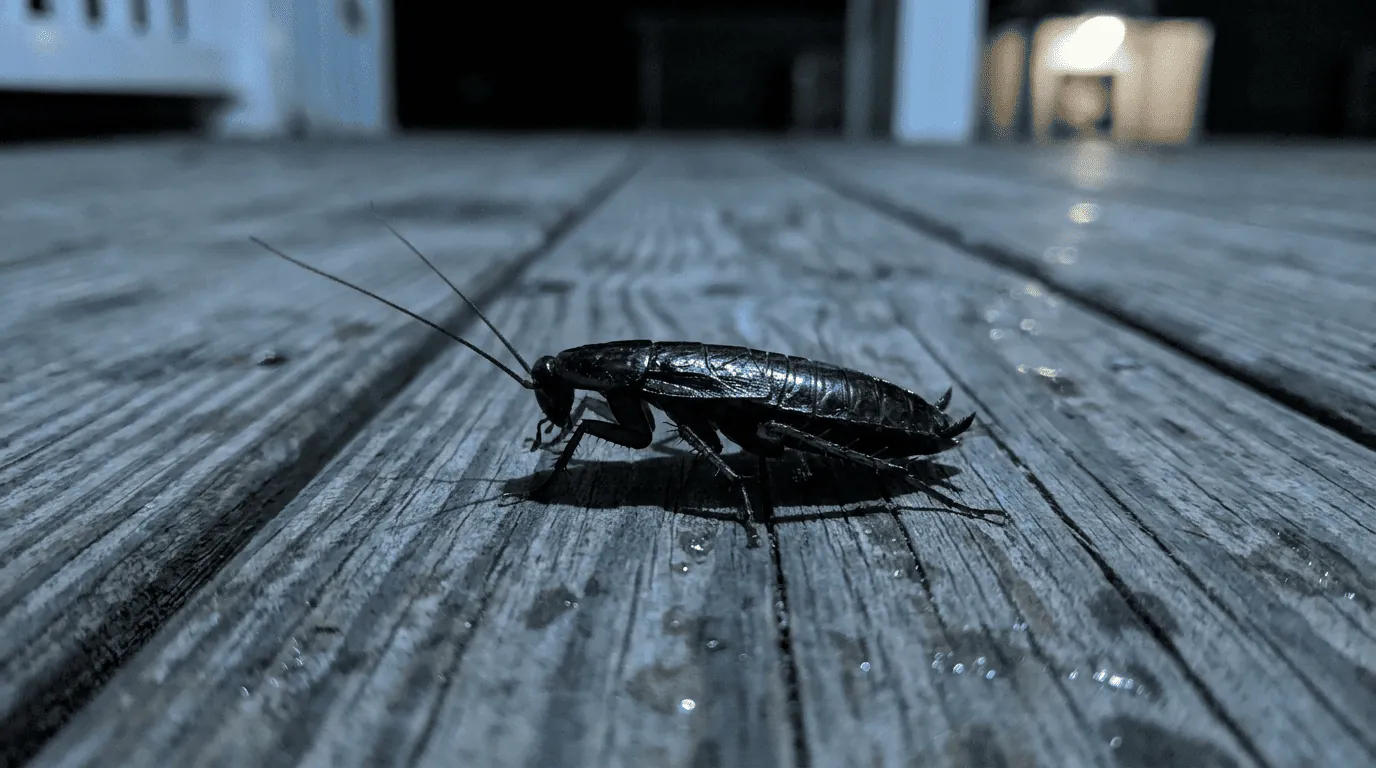
Smokybrown & American cockroaches ("palmetto bugs")
Periplaneta fuliginosa; P. americana
- Size
- ~1–1.5 in (smokybrown); up to ~2 in (American)
- Look for
- Large, shiny mahogany to dark brown; strong fliers on warm nights.
- Found
- Mature hardwood canopy, mulch, gutters, attics, crawl spaces; wander indoors (UGA).
- When
- Most active in warm, humid months.
-

Asian tiger mosquito & other mosquitoes
Aedes albopictus; Culex spp.
- Size
- ~1/8–1/4 in
- Look for
- Tiger mosquito: black with bright white bands on legs and a white stripe down the back.
- Found
- Container water — saucers, buckets, clogged gutters, tarps, tires, toys.
- When
- Spring through first frost; Ae. albopictus bites during the day (GA DPH).
-
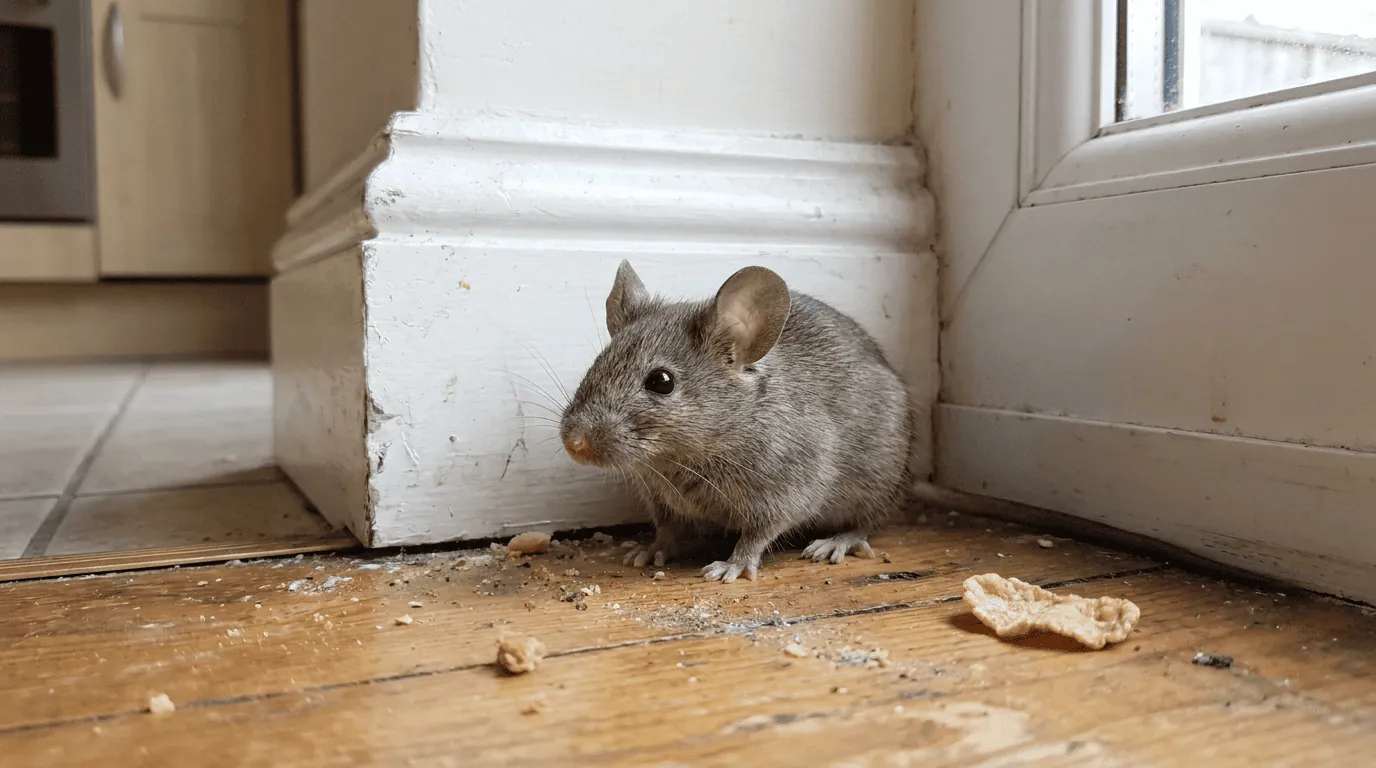
House mice
Mus musculus
- Size
- Body ~2.5–3.5 in
- Look for
- Small, light gray-brown, large ears, tail about as long as the body.
- Found
- Kitchen voids, behind appliances, wall cavities, garages, attics.
- When
- Indoor pressure rises in fall and winter (UGA).
-

Roof rats & Norway rats
Rattus rattus; R. norvegicus
- Size
- Body ~6–10 in
- Look for
- Roof rat: sleek, dark, tail longer than body, climbs. Norway rat: heavier, blunt muzzle, burrows.
- Found
- Roof rats: attics, trees, vines, fence lines. Norway rats: foundations, crawl spaces, burrows, sewers.
- When
- Year-round; more noticeable indoors in cooler months.
-
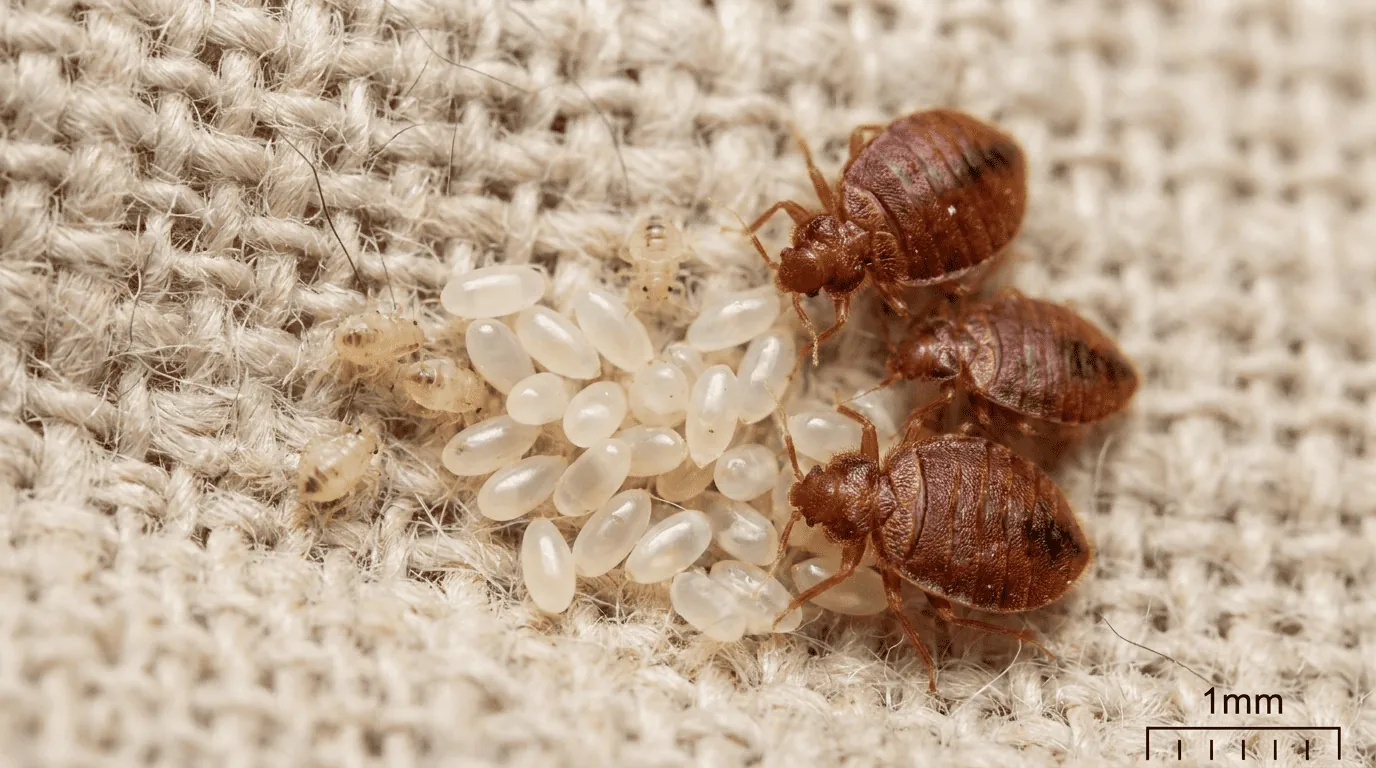
Bed bugs
Cimex lectularius
- Size
- Adults ~3/16 in (apple-seed size)
- Look for
- Flat, oval, reddish-brown; swell and redden after feeding; no wings.
- Found
- Mattress seams, box springs, headboards, sofa joints, luggage.
- When
- Year-round; spread through travel and shared housing.
-

House & widow spiders
Various; Latrodectus spp. (widows), Loxosceles reclusa (brown recluse, uncommon intown)
- Size
- Varies
- Look for
- Black widow: shiny black, red hourglass underneath. Most house spiders are harmless.
- Found
- Garages, crawl spaces, woodpiles, window corners, eaves.
- When
- Most visible late summer–fall.
-
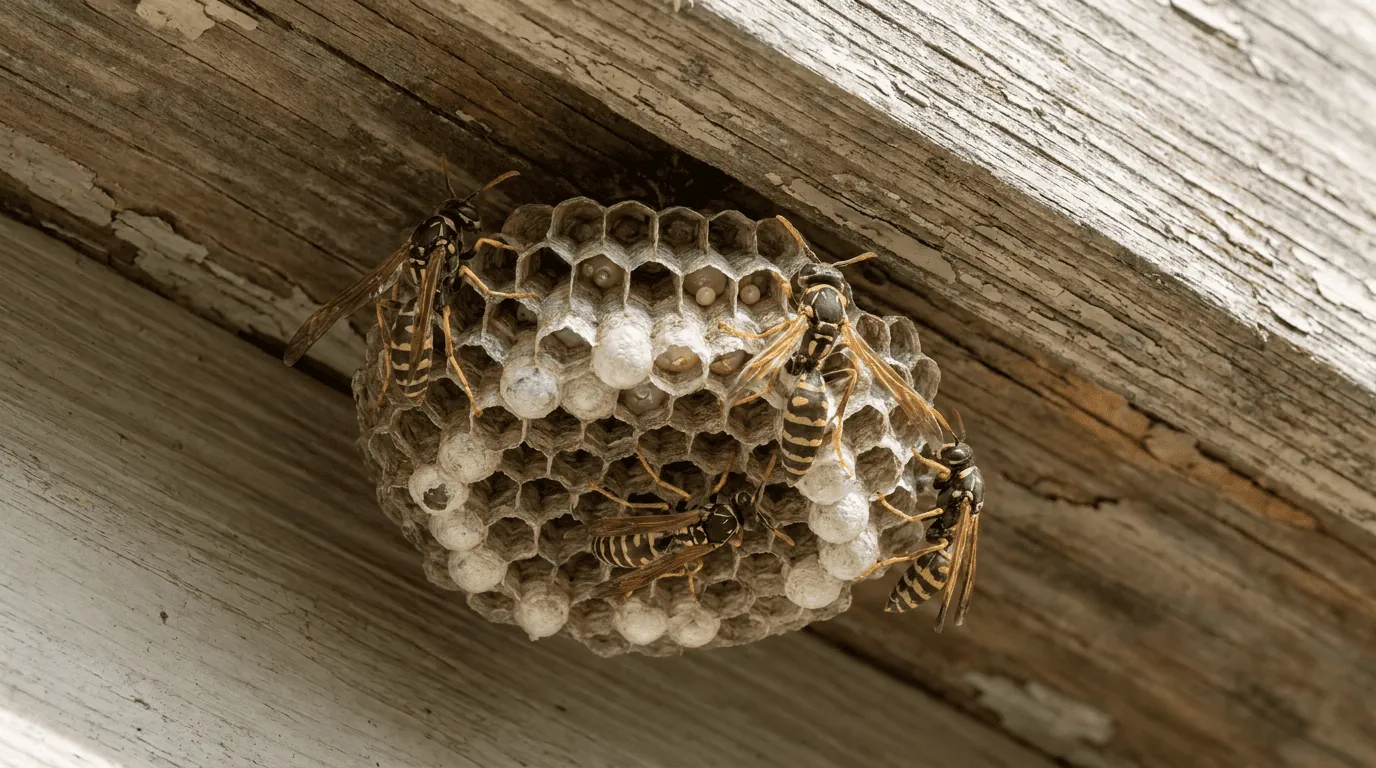
Wasps, yellowjackets & hornets
Polistes, Vespula, Vespa crabro, Dolichovespula maculata
- Size
- ~1/2–1.25 in
- Look for
- Paper wasps: open umbrella combs under eaves. Yellowjackets: ground or wall voids. Bald-faced "hornets": enclosed gray paper nests in trees.
- Found
- Eaves, decks, soffits, shrubs, ground holes, wall voids.
- When
- Colonies peak late summer–fall when yellowjackets become aggressive.
-
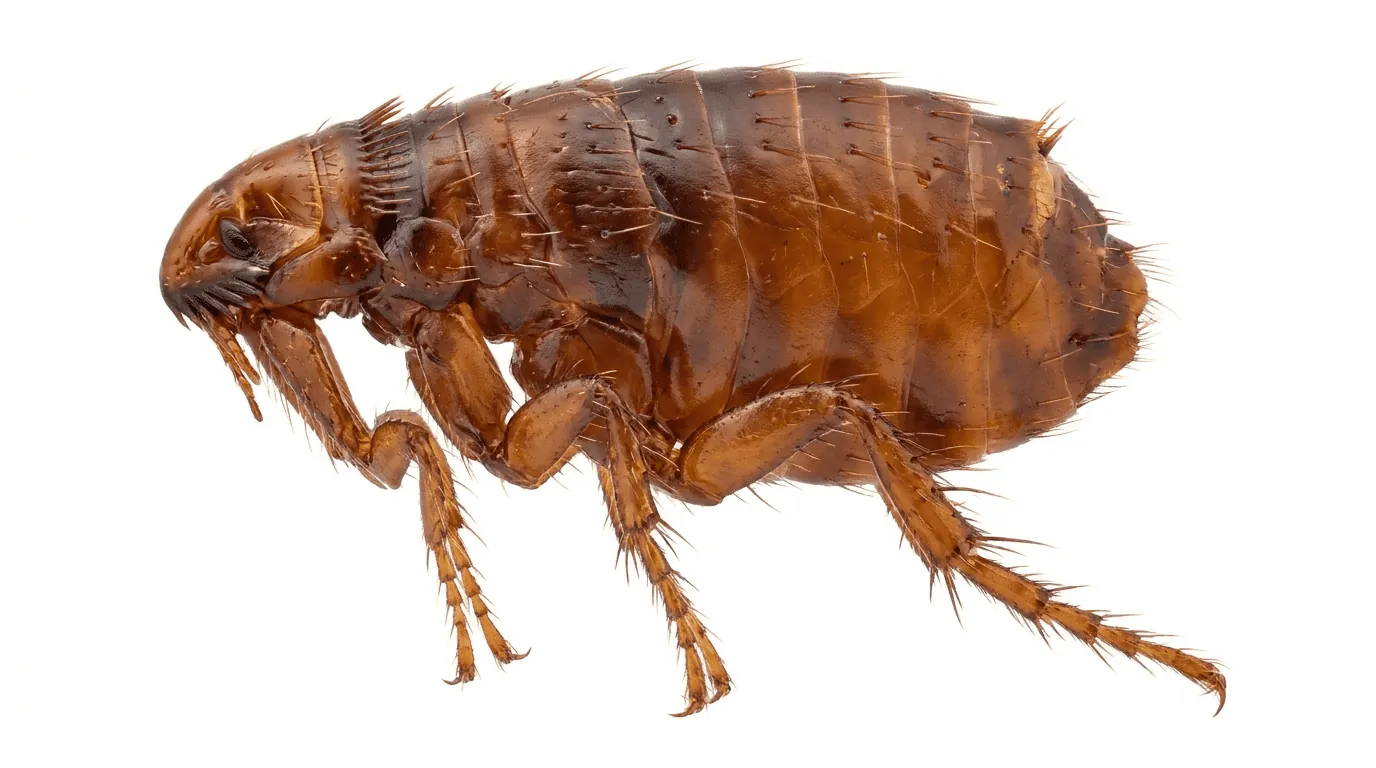
Cat fleas
Ctenocephalides felis
- Size
- ~1/16–1/8 in
- Look for
- Tiny, dark, laterally flattened, jump strongly.
- Found
- Pet bedding, carpets, shaded yard areas visited by pets or wildlife.
- When
- Warm, humid months; indoor populations year-round.
-

Lone star & American dog ticks
Amblyomma americanum; Dermacentor variabilis
- Size
- ~1/8 in unfed adults
- Look for
- Lone star female: single white spot on the back. American dog tick: mottled ornate shield.
- Found
- Wooded edges, tall grass, leaf litter, trails, unmanaged yard borders.
- When
- Spring through fall; adults and nymphs active in warm months.
-
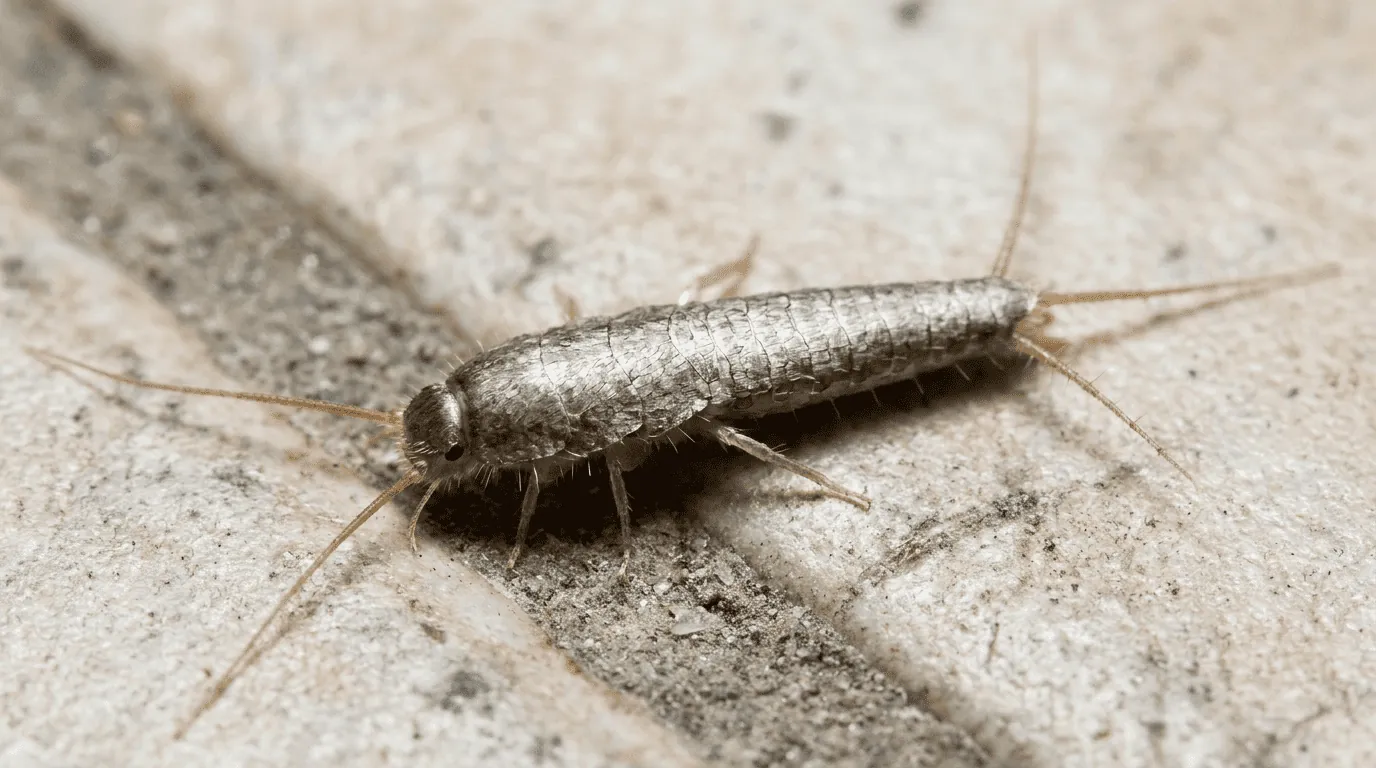
Silverfish & occasional invaders
Lepisma saccharinum; millipedes, centipedes, earwigs
- Size
- ~1/2 in (silverfish)
- Look for
- Silverfish: silvery, carrot-shaped, three tail bristles. Millipedes: many legs, curl up.
- Found
- Bathrooms, basements, crawl spaces, leaf litter against foundations.
- When
- Millipede migrations after heavy rain and in fall.