
Pest guide
Signs of termite damage: where to look in an Atlanta home
Subterranean termites work out of sight, so damage often goes unnoticed for a long time. Knowing where to look turns a surprise into an early find.

The most reliable sign: mud tubes
Subterranean termites build pencil-width tubes of soil and saliva to travel between soil and wood without drying out. Look on foundation walls, crawl-space piers, plumbing, the inside of garage walls, and expansion joints in slabs.
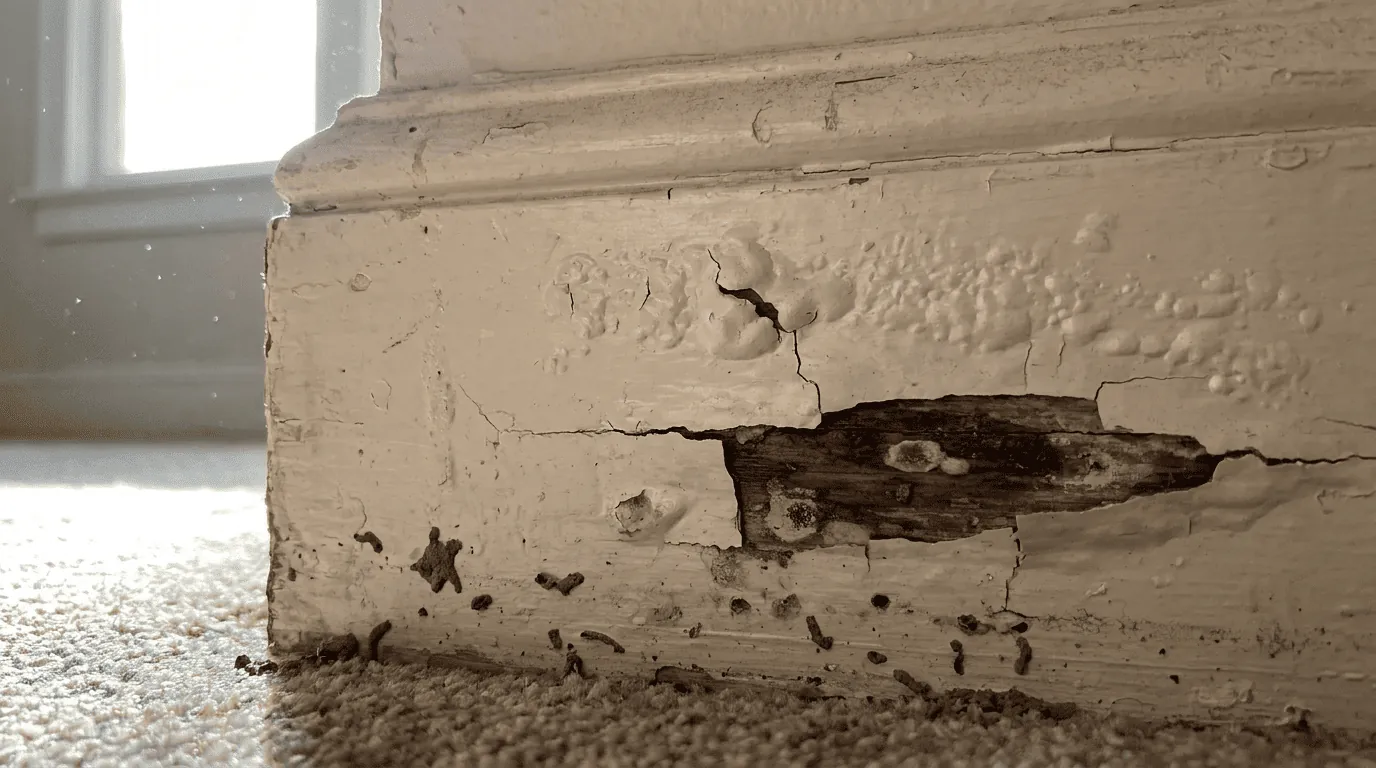
Damage you can see or hear
- Wood that sounds hollow or papery when tapped
- Blistered, bubbled or rippled paint, often mistaken for water damage
- Sagging floors or soft spots, especially near bathrooms and kitchens
- Doors and windows that suddenly stick as wood swells around galleries
- Galleries running along the grain, packed with soil
Where to look by foundation type
Crawl spaces (common in intown bungalows): sill plates, joists, piers, wood debris on the ground. Slabs: around plumbing penetrations, expansion joints, the base of door frames. Basements (common on hilly lots): sill plates, finished-wall baseboards, stair stringers.
Sources
Sources reviewed November 2026. Regulations change; confirm with the issuing agency.