
Pest guide
Termite swarmers: what flying termites in Atlanta mean
A swarm of small winged insects near a sunny window in spring is one of the most common reasons Atlanta homeowners call about termites. Here’s how to read the signs.
What swarmers are
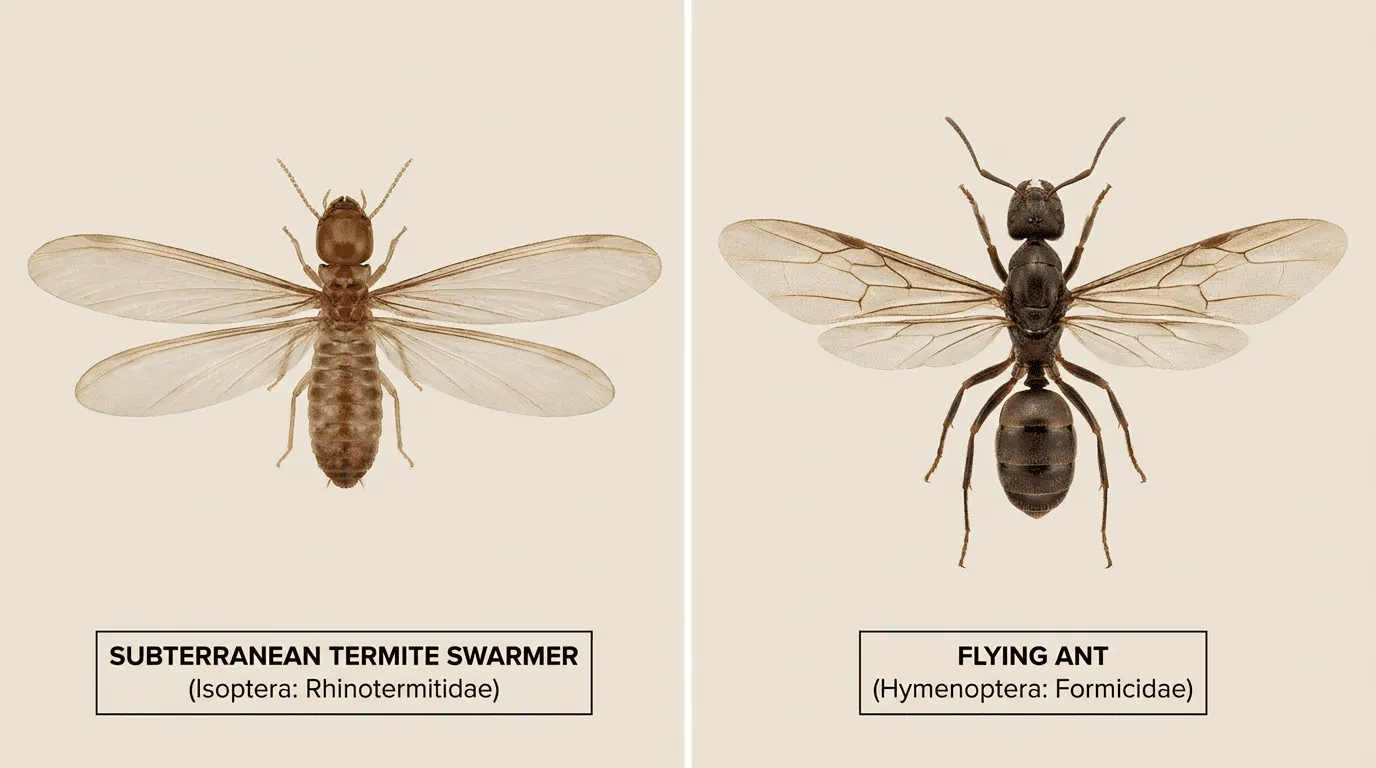
Swarmers (alates) are the winged reproductive termites a mature colony sends out to start new colonies. Native eastern subterranean swarmers are dark brown to black, about 3/8 inch long including the wings, and shed their wings soon after flight. UGA Extension describes Formosan swarmers, which are rare in Georgia, as caramel to brownish-yellow.
When they swarm
Native subterranean termites usually swarm on warm, often sunny days in late winter and spring, frequently after rain. UGA notes that Formosan termites swarm from late May to early June at dusk and are attracted to lights.
Swarmers inside vs. outside
Swarmers outdoors, from a stump or woodpile, show colonies are nearby, which is normal in Atlanta. Swarmers inside, especially piles of wings on windowsills, near doors or in bathrooms, strongly suggest a colony is feeding in or under the structure. That calls for an inspection.
Termite swarmer or flying ant?
| Feature | Termite swarmer | Flying ant |
|---|---|---|
| Waist | Broad, straight | Pinched, narrow |
| Antennae | Straight, beaded | Elbowed |
| Wings | Two pairs, equal length, much longer than body | Front pair longer than hind pair |
| After flight | Wings shed in piles | Wings retained longer |
If you find swarmers inside
- Collect a few in a sealed bag or photograph them clearly.
- Note where they emerged (a crack, baseboard, window frame).
- Don’t spray the emergence point; it can make the source harder to find.
- Schedule a termite inspection. Swarmers don’t damage wood, but their colony does.
Sources
- UGA Circular 868 — Identifying the Formosan Subterranean Termite
- UGA CAES — Georgia initiative fights Formosan termite
Sources reviewed November 2026. Regulations change; confirm with the issuing agency.